

Advanced EMT Program

Whether you serve in a volunteer department, a municipal EMS service, a tribal health organization, an industrial clinic, or a rural ambulance service, becoming an Advanced EMT expands your ability to care for patients when minutes matter.
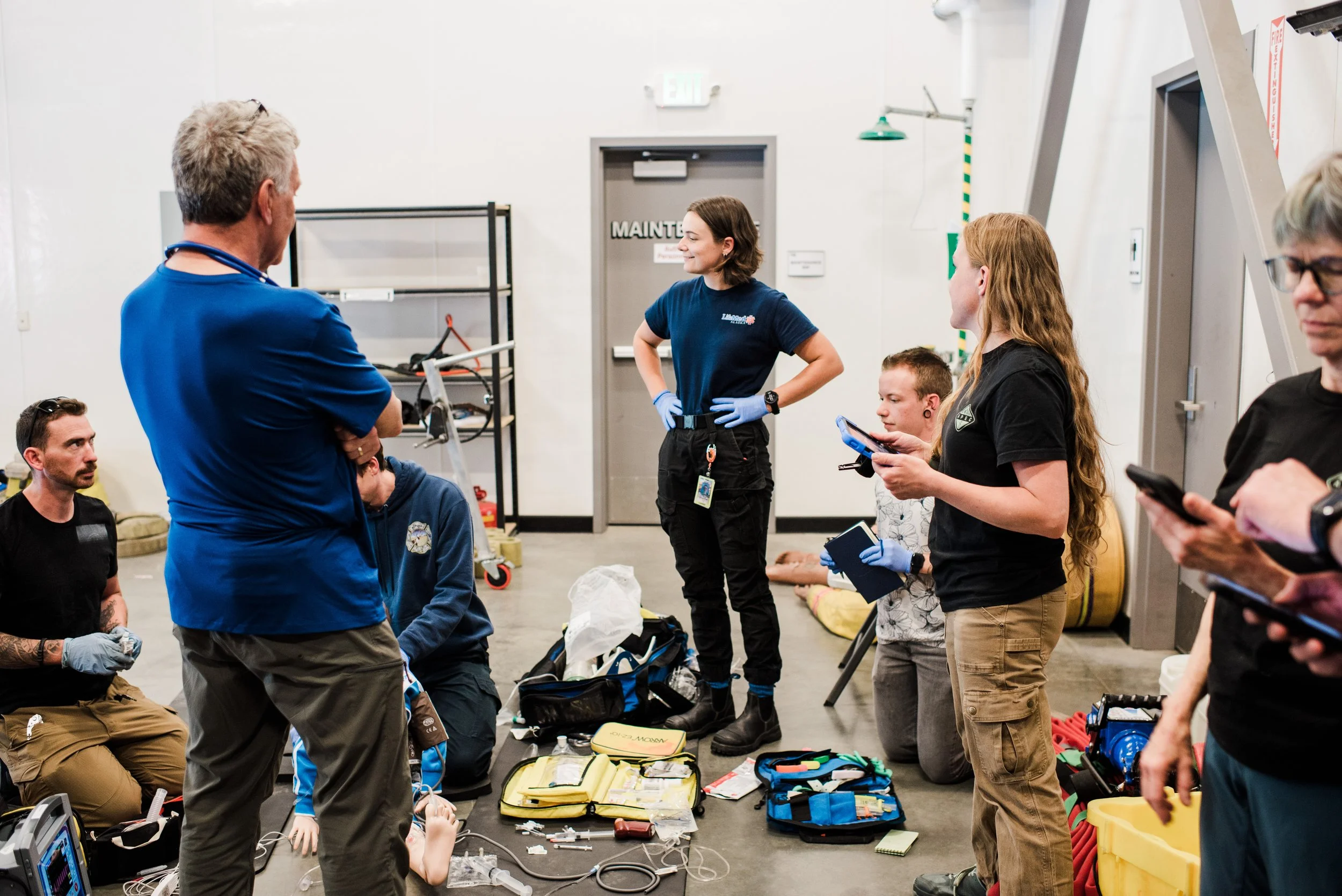
The Alaska Prehospital Education Consortium (APEC) prepares experienced EMTs to become confident Advanced EMTs through a flexible program built specifically for Alaska. Our students learn from experienced Alaska EMS professionals using a combination of online learning, live instruction, hands-on skills practice, clinical experiences, and realistic patient simulations.
Upon successful completion of the program, graduates are eligible to complete the National Registry testing process and apply for Alaska Advanced EMT certification.
Pre-register now
Courses open August 24th, 2026
Choose Your Course Option
Hybrid-Online
Best for students who need a flexible weekly schedule. Students complete coursework on their own schedule while meeting course deadlines. Hybrid-Online students still attend required Virtual Skills Sessions, complete clinical and field experiences, and attend a scheduled Final Practical Assessment offered in Alaska.
Instructor-Led
Best for students who want a structured cohort and live instruction. Students attend live Zoom classes every Monday and Thursday during a 16-week course, participate in required Virtual Skills Sessions, complete clinical and field experiences, and complete the Final Practical Assessment immediately after the course.
Course Expectations
Students in both course options should expect to:
Complete online lessons and assignments.
Attend required Virtual Skills Sessions.
Practice AEMT psychomotor skills with required training equipment.
Complete clinical and field experience requirements.
Track clinical and field progress in Platinum Planner.
Attend a one-week in-person Final Practical Assessment.
Complete the certification testing and application process after successful course completion.
Designed for Alaska
Alaska presents unique challenges for EMS providers. Long transport times, limited resources, severe weather, and remote communities require clinicians who can think critically and provide advanced care long before arriving at a hospital.
Our curriculum was designed by Alaska educators, physicians, paramedics, and experienced EMS leaders to prepare providers for those realities—not just to pass an exam.
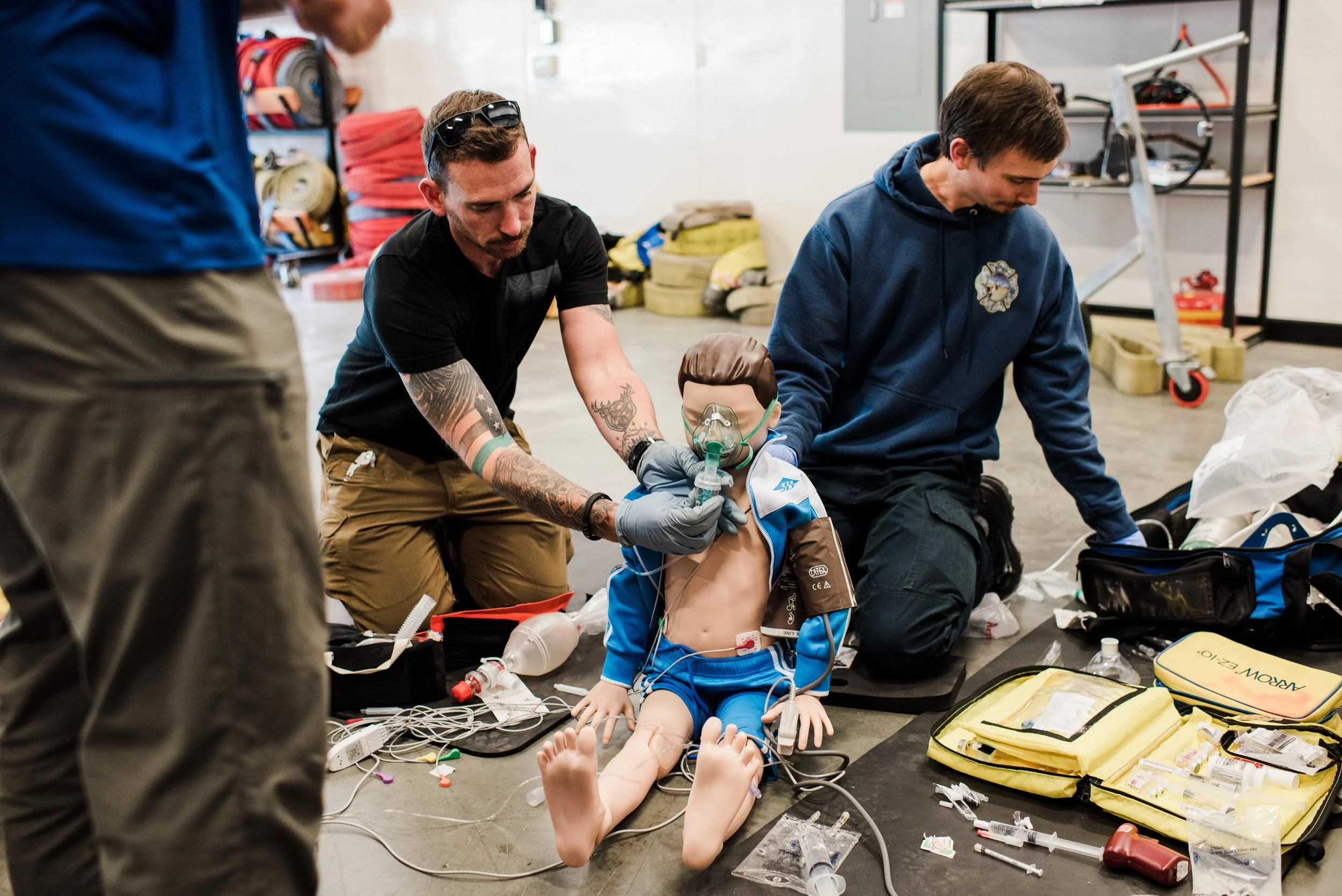
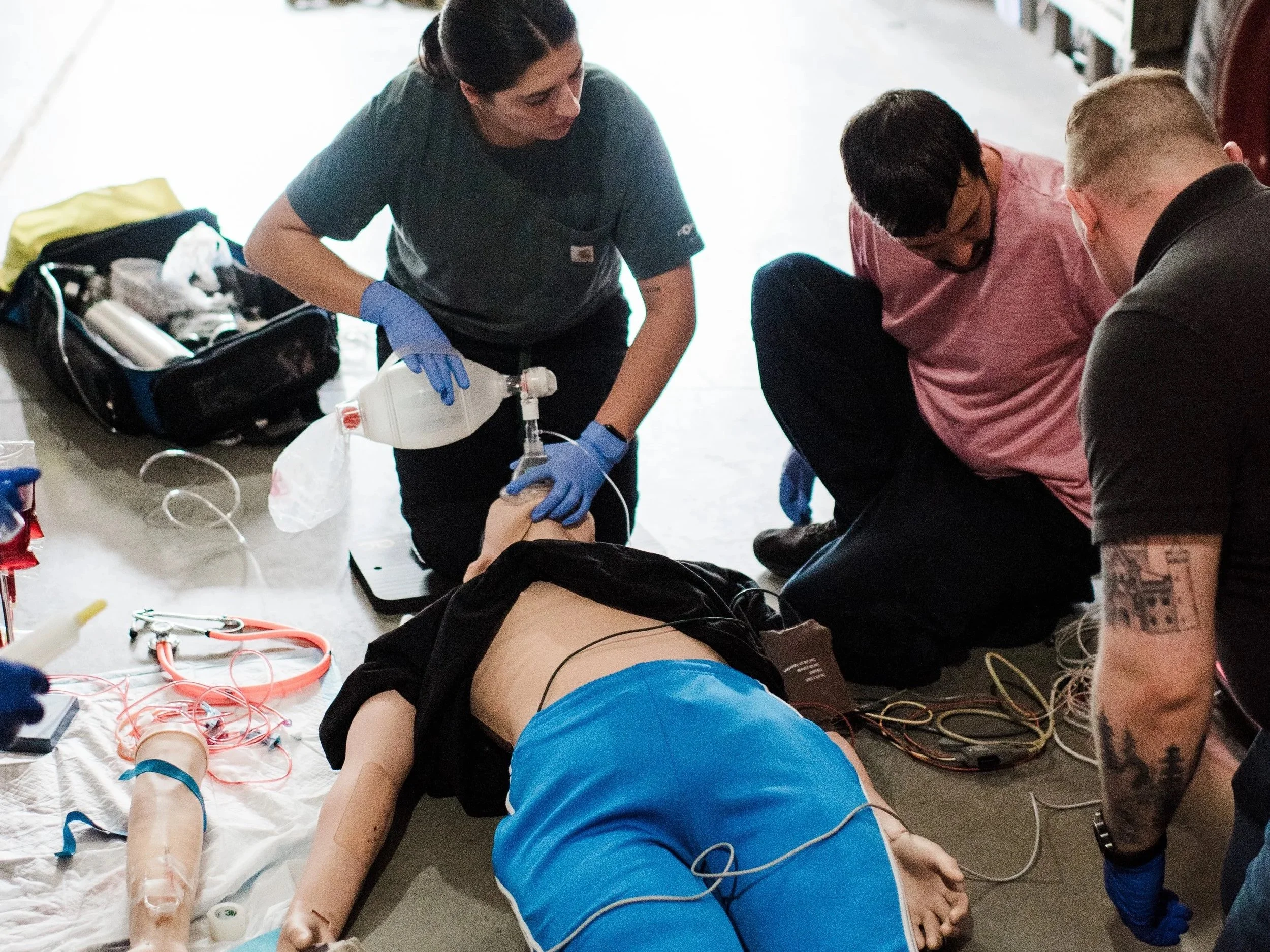
Throughout the course you'll build advanced assessment skills, medication administration, IV therapy, airway management, cardiac care, trauma management, and clinical decision-making through a combination of online learning and hands-on practice.
Two Ways to Complete the Same High-Quality Program
Every APEC student completes the same curriculum, meets the same graduation requirements, and earns the same eligibility for National Registry testing.
The difference is simply how you learn.
Read through our FAQs below and choose the option that best fits your schedule and learning style.
Why Choose APEC?
Students choose APEC because we combine flexibility with meaningful instructor support.
• Professional video instruction available anytime.
• Experienced Alaska EMS instructors who know your practice environment.
• Live Virtual Skills Sessions where you practice—not just watch.
• Clinical and field experiences that reinforce real patient care.
• A one-week Final Practical Assessment that prepares you for certification and independent practice.
• A program designed to fit around work and family responsibilities.
Whether you're working full-time, volunteering in your community, or balancing shift work, APEC provides multiple ways to complete your education while maintaining high expectations and strong instructor support.
-
The Instructor-Led program follows a structured 16-week curriculum.
Students progress through the course together as a cohort and complete coursework according to a set schedule. The program includes scheduled live instruction, online coursework, examinations, required skills activities, clinical and field experiences, and the Final Practical Assessment.
This pathway is best suited for students who prefer regular instructor interaction, a predictable weekly schedule, and the accountability of progressing with a cohort.
-
The Hybrid-Online program is largely self-paced, allowing students to complete coursework around employment, family responsibilities, and other commitments.
Students must maintain minimum academic progress by completing, on average, at least one of the following each week:
One chapter
One section examination
One unit examination
Most Hybrid-Online students complete the program in approximately eight months while balancing the course with work and other responsibilities.
Students working on the course full-time can complete the Hybrid-Online curriculum in 16 weeks.
All students must complete the required academic coursework, skills requirements, clinical and field experiences, documentation, and Final Practical Assessment before graduating.
-
Both pathways teach the same Advanced EMT curriculum and lead to the same program- completion requirements.
The Instructor-Led program is best for students who want:
A structured 16-week schedule
Regular live instruction
A defined weekly pace
Consistent interaction with instructors and classmates
The Hybrid-Online program is best for students who want:
Greater scheduling flexibility
The ability to progress largely at their own pace
The option to complete coursework around work and family commitments
The opportunity to complete the program in 16 weeks when working on it full-time, or over a
longer period when needed
-
Possibly.
A student may request a transition from the Instructor-Led program to the Hybrid-Online program when a significant hardship or documented need prevents continued participation in the structured Instructor-Led schedule.
The request must:
Be submitted in writing
Explain the hardship or need
Be reviewed by program faculty
Receive faculty approval before the transition occurs
Approval is not automatic. Faculty will consider the student's academic standing, course progress, participation, and ability to meet the Hybrid-Online program requirements.
-
No. Students may not transfer from the Hybrid-Online program into the Instructor-Led cohort under any circumstances.
The Instructor-Led program follows a fixed sequence and schedule, with students progressing together through the curriculum. A student who enrolls in the Hybrid-Online pathway remains enrolled in that pathway.
-
Yes. Hybrid-Online students are welcome to sit in on Instructor-Led classes when space and instructional circumstances permit.
Attending or auditing an Instructor-Led class does not replace any Hybrid-Online coursework, assignments, examinations, skills requirements, or other program obligations.
Hybrid-Online students remain responsible for completing every requirement assigned through the Hybrid-Online pathway.
-
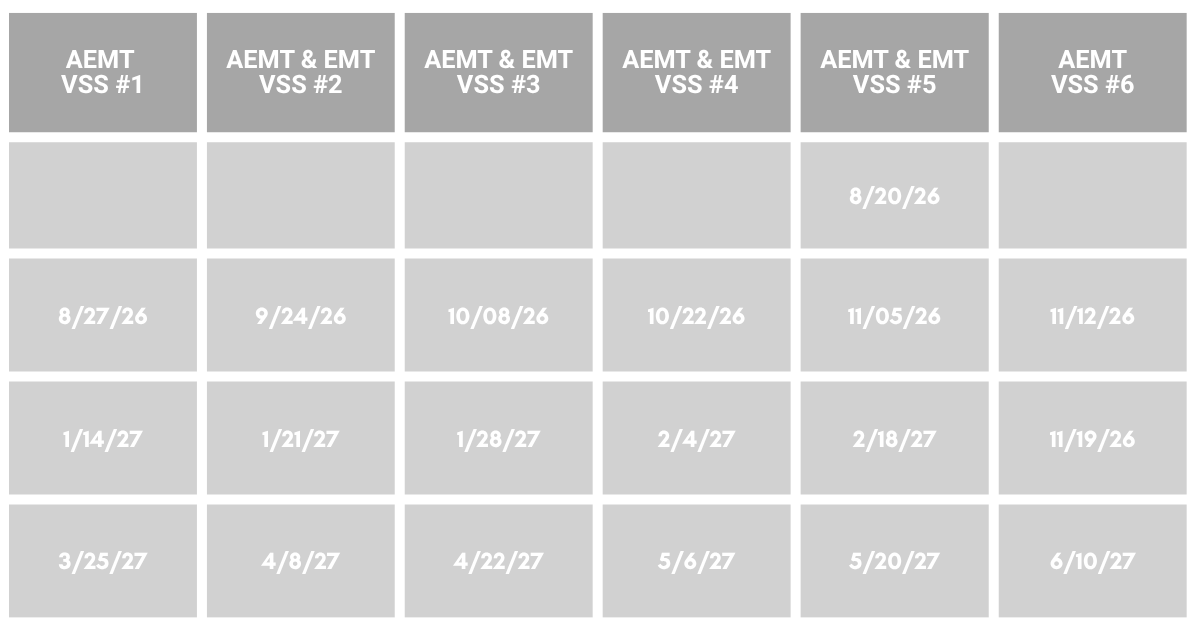
Virtual Skills Sessions, or VSS, are live, instructor-led practice sessions that help students develop and demonstrate Advanced EMT skills.
These are active learning sessions rather than traditional lectures. Students may:
Practice psychomotor skills
Participate in guided patient-care scenarios
Work with instructors and classmates
Receive coaching and corrective feedback
Demonstrate skill competency
Prepare for clinical experiences and the Final Practical Assessment
Students must have the required training equipment, peers, and other resources available for applicable sessions.
VSS requirements may differ based on the student's entering certification level. Students must complete every VSS assigned by the program or their instructor.
-
Platinum Planner is the electronic platform APEC uses to document and monitor clinical and field education.
Students use Platinum Planner to:
Record patient encounters
Document procedures and skills
Track required competencies
Submit clinical and field records
Monitor progress toward completion
Receive instructor review and approval
Platinum Planner helps ensure that each student completes the required patient-care experiences and competencies before graduation.
-
Clinical and field experiences provide supervised opportunities to work with real patients in hospitals, clinics, ambulance services, or other approved healthcare settings.
These experiences allow students to:
Apply course knowledge
Practice patient assessment
Perform approved skills
Develop clinical judgment
Work with experienced healthcare professionals
Gain confidence caring for real patients
Students must complete all assigned clinical and field requirements before graduation.
-
Whenever possible, APEC works with students and approved partner agencies to arrange clinical and field experiences near the student's home community.
Placement depends on:
Availability of an approved clinical or EMS site
Current agency agreements
Qualified preceptors
Adequate patient-care opportunities
The student's ability to complete all required competencies
Students in communities without an approved placement site may need to travel.
-
The Final Practical Assessment, or FPA, is a required one-week, in-person capstone experience completed after the academic, skills, and clinical portions of the program.
During the FPA, students may participate in:
Skills verification
Individual and team-based patient scenarios
Patient-assessment exercises
Clinical decision-making activities
Competency evaluations
Preparation for certification testing and independent practice
Students must successfully complete the FPA to graduate.
-
Before beginning the program, students must have:
A current EMT certification issued by any U.S. state or by the National Registry of Emergency Medical Technicians (NREMT)
A current BLS Provider or Professional Rescuer CPR certification
FEMA ICS-100
FEMA ICS-200
Either FEMA IS-700 or FEMA IS-800
Community CPR, babysitter CPR, Friends and Family CPR, and similar awareness-level courses do not satisfy the CPR prerequisite.
Students who are uncertain whether their CPR certification meets the requirement should contact APEC before enrolling.
-
Advanced standing for current Alaska EMT-2 and EMT-3 credentials is available only in the Hybrid- Online program.
APEC will review the student's current certification and previous education to determine which Hybrid-Online course requirements may already be satisfied.
EMT-2 and EMT-3 credentials do not provide advanced standing in the Instructor-Led program. Instructor-Led students complete the full structured 16-week curriculum with their cohort.
All students must complete the remaining academic, skills, clinical, field, assessment, documentation, and graduation requirements for their pathway.
-
Yes.
An EMT-2 or EMT-3 may choose to complete coursework for which advanced standing might otherwise be available.
This may be useful for students who want additional review, updated education, or more preparation before completing examinations and practical requirements.
-
Yes. Many APEC students continue working while enrolled.
Instructor-Led students must be able to follow the structured 16-week schedule and participate in scheduled activities.
Hybrid-Online students have greater flexibility but must maintain the minimum academic- progress requirement.
All students must also plan for applicable Virtual Skills Sessions, clinical and field experiences, and the in-person Final Practical Assessment.
-
Yes. The program is designed to improve access to Advanced EMT education throughout Alaska, including rural and remote communities.
Much of the academic instruction can be completed online. APEC also works with students and partner agencies to arrange clinical and field experiences as close to the student's community as possible.
Rural students should still anticipate possible travel for:
Clinical or field experiences
Certain hands-on activities
The Final Practical Assessment
-
Students should have:
Reliable internet access
A computer or tablet capable of running current web browsers
A working webcam and microphone
The ability to participate in Google Meet sessions
Basic computer and file-management skills
Regular access to email
A smartphone may be helpful, but it should not be the student's only device for completing coursework.
-
Yes. Each student receives faculty support throughout the program. Instructors help students:
Understand difficult course material
Navigate program requirements
Review academic progress
Prepare for skills and clinical experiences
Address course-related questions
Students may communicate with faculty through Google Meet, email, telephone, text messaging, the learning-management system, and other approved platforms.
-
Requirements depend on the student's pathway, entering certification level, and assigned learning activities.
Instructor-Led students participate in scheduled live classes as part of the structured 16-week program.
Students must also attend every Virtual Skills Session, evaluation, meeting, or other activity designated as required by the program or assigned by their instructor.
-
Students must obtain or have access to designated training equipment for Virtual Skills Sessions, independent practice, and competency demonstrations.
Students may also need:
One or more appropriate peers for team-based skills practice
Access to EMS training equipment
A qualified mentor who can provide in-person support
APEC will provide the approved equipment and participation requirements before applicable activities.
-
Yes. Each AEMT student must have access to a qualified mentor throughout the course.
An AEMT mentor must hold a current Alaska AEMT certification or higher and must be available to meet with the student in person at least once every two weeks.
Mentors may provide skills support, professional guidance, and help with course expectations. Mentors must review and agree to APEC's mentor standards.
-
Tuition is $3,250 for either the Instructor-Led or Hybrid-Online pathway. Tuition includes four months of course access.
The Instructor-Led program follows a structured 16-week schedule and is designed to be completed during the four-month access period.
Hybrid-Online students may also complete the program within four months when working on the course full-time. Most Hybrid-Online students take longer because they balance coursework with employment and other responsibilities.
Travel, lodging, meals, personal technology, required student-acquired training equipment, and other individual expenses are not included unless specifically stated in the student's enrollment agreement.
-
Yes. Students may pay the $3,250 tuition in full or make four equal monthly payments of $812.50.
The installment plan divides the tuition into four payments. It does not extend the original four month course access period.
-
Yes. After the initial four months of access, a Hybrid-Online student who has not completed the program may continue on a month-to-month basis by paying a $150 course-extension fee for each additional month.
Course extensions do not waive academic-progress requirements. Students must remain actively engaged and continue meeting all academic, skills, clinical, field, documentation, and administrative requirements.
The option to extend course access applies to the Hybrid-Online pathway. The Instructor-Led pathway follows its fixed 16-week cohort schedule.
-
No. The four monthly payments of $812.50 cover the original $3,250 tuition and four months of course access.
Any Hybrid-Online extension beyond the initial four months requires a separate $150 monthly course-extension fee.
-
Yes. Many students receive tuition support from:
EMS agencies
Fire departments
Tribal health organizations
Hospitals or healthcare employers
Regional EMS councils
Workforce-development programs
Grant-funded organizations
Other sponsoring agencies
Course enrollment belongs to the individual student and cannot be transferred to another person, even when an employer, agency, or grant pays the tuition.
-
Funding opportunities vary by student, employer, community, and enrollment period. Possible sources may include:
Employer tuition assistance
Tribal or regional funding
Workforce-development programs
Scholarships
Grants
Regional EMS support
APEC's four-payment installment option
Students are responsible for confirming eligibility and completing required funding applications.
-
Students must submit withdrawal requests in writing.
Refund eligibility depends on when the written withdrawal request is received and the provisions of APEC's current Terms and Conditions.
Students should review the complete Terms and Conditions before enrolling and contact APEC promptly if withdrawal becomes necessary.
-
Students should contact their instructor and APEC administration as soon as possible. Depending on the circumstances, a student may be asked to:
Complete remediation
Submit a written request for accommodation
Develop a revised academic-progress plan
Address missed attendance or equipment requirements
Failure to maintain progress or comply with program requirements may result in academic warning, course deactivation, delayed completion, additional fees, administrative withdrawal, or dismissal.
-
Students should expect that some travel may be required. Travel may be necessary for:
Clinical experiences
Field experiences
Hands-on training
The Final Practical Assessment
APEC attempts to minimize unnecessary travel and arrange local experiences when appropriate sites and qualified preceptors are available.
Students are generally responsible for transportation, lodging, meals, and related travel costs unless another arrangement has been confirmed.
-
FPA locations are selected based on program needs, available facilities, faculty, and statewide student access.
Students will receive the confirmed location and schedule with enough notice to make travel arrangements.
-
Students must complete coursework, examinations, quizzes, skills evaluations, and assignments honestly and independently unless collaboration is specifically permitted.
Cheating, plagiarism, unauthorized assistance, misrepresentation, or copying and sharing protected testing materials may result in disciplinary action, suspension, or dismissal.
Secure testing and Platinum Education Group materials may not be copied, saved, recorded, reproduced, or shared.
-
No. Course enrollment is assigned to the individual student and cannot be transferred, substituted, sold, or reassigned to another person.
This applies even when an employer, agency, scholarship, or grant pays the tuition.
-
Failure to meet academic, attendance, equipment, mentor, skills, clinical, field, payment, or other program requirements may result in:
Inability to complete required skills
Academic warning or remediation
Course deactivation
Delayed course completion
Additional fees
Administrative withdrawal
Dismissal from the program
Students should communicate with their instructor promptly when problems arise.
-
Graduation requires successful completion of all applicable:
Academic coursework
Chapter, section, and unit examinations
Assigned Virtual Skills Sessions
Skills competencies
Clinical experiences
Field experiences
Platinum Planner documentation
Final Practical Assessment activities
Financial and administrative obligations
Students must meet all current APEC and State of Alaska requirements before course completion is reported.
-
After successfully completing the APEC Advanced EMT program, graduates may become eligible to:
Complete the applicable National Registry examination process
Apply for Alaska Advanced EMT certification
Seek authorization to practice within the scope permitted by the State of Alaska and their employing agency
Graduation from the program does not, by itself, grant certification or permission to practice.
FREQUENTLY ASKED QUESTIONS